
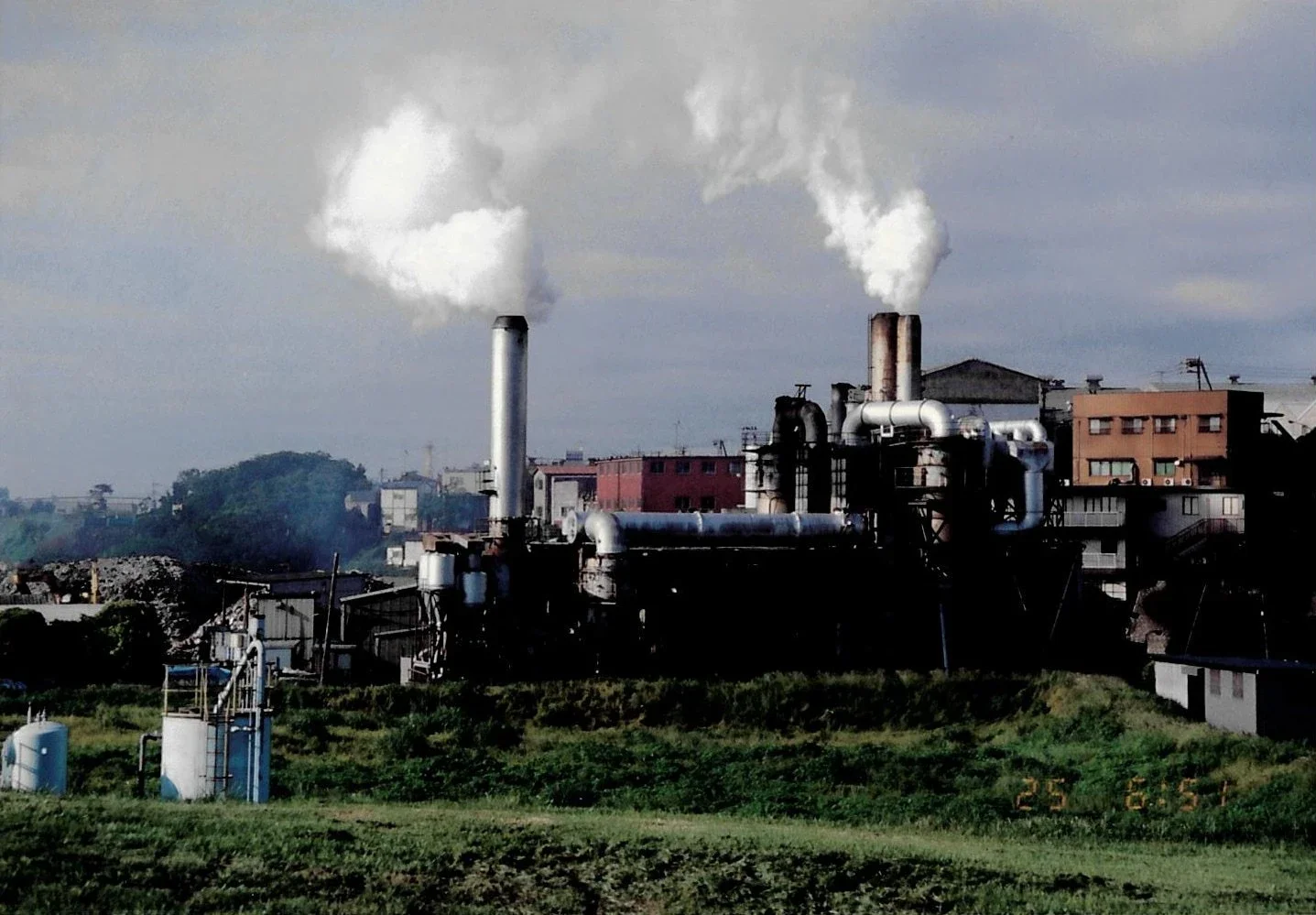
NAF Atsugi Exposure Records
From 1988-2001 multiple environmental sampling studies and health risk assessments were conducted at NAF Atsugi.
“These evaluations reach a consistent and unequivocal conclusion: emissions from the Shinkampo Incinerator Complex resulted in ambient air and soil contamination at NAF Atsugi that exposed residents and personnel to levels associated with increased lifetime risks of cancer and non-cancer health effects.”
1980-Incinerator Complex Begins Operations
The incinerator complex was contracted in 1978 through a major domestic trading house by operator Tetsuro Murata, who had been involved in the waste disposal business since 1973. The facility was constructed on land next to the base and began operations on March 3, 1980, alongside a large, unrestricted open burn pit. Unfortunately, the contractor responsible for construction had no prior experience in waste disposal. From the start, the complex faced numerous design and operational challenges, requiring years of trial and error before processes could function reliably. Meanwhile, waste continued to be openly burned in the adjacent pit. In November 1980, the operator—later linked to the Yakuza—bribed a city official to turn a blind eye to the illegal open burning of waste.
In May, 1983 the operator formally established the corporation, Shinkampo Co., Ltd., whose principal operation was the processing of waste.
In May 1984, Kanagawa Prefectural Police arrested Murata for illegal open burning and cited the operator for disposing of industrial waste without a permit. Murata subsequently obtained an industrial waste license in April 1985, formalizing operations that had previously been permitted only for municipal waste. The incinerator continued operations under the same ownership. Consequently, airborne hazards from the complex began on March 3, 1980.
Start Date Sources
Prepared by: Navy Environmental Health Center (NEHC)
Prepared by: Tetsuro Murata, Incinerator Complex Operator
Prepared by: Japan National Diet, House of Representatives
1988-Ambient Air Sampling Study
Sampling Dates: September 13 - October 2, 1988.
5 Sampling Locations: Pistol Range, Roof of Bldg. 3043, Skeet Range, Golf Course 1st Tee, & Driving Range
Findings: The initial studies demonstrated that the Shinkampo Incinerator Complex measurably contaminated base air with toxic and carcinogenic pollutants at elevated levels, indicating “a strong possibility of health hazards associated with direct contact with the downwind exhaust plume of the incinerators,” but requiring further investigation and more comprehensive analysis.
“When the plumes come over the base keep all personnel indoors and send as many people off base as possible. Keep pregnant woman off the base. Avoidance of plume exposure should be observed as early as possible.”
Prepared by: York Research Consultants
Prepared by: U.S. Navy Aircraft Environmental Support Office (AESO)
1990-Ambient Air Sampling Study
Sampling Dates: August 8-13; September 21-25, 1990
1 Sampling Location: Fenceline (North of Incinerator), sampling also via helicopter
Findings: The investigations found that ambient air at NAF Atsugi contained a “brew of toxic chemicals” with detectable dioxins, dibenzofurans, carcinogenic organics, and heavy metals from the adjacent incinerators yielding a worst‑case lifetime excess cancer risk of about 906 cases per million people (9 per 10,000) —far above accepted U.S. risk criteria (Target risk: 1 excess case per 1,000,000; maximum acceptable risk: 1 per 10,000). Evaluators note “a strong potential for adverse health effects on base residents because of the incinerators.”
“Each of us has almost 20 years of air pollution control experience and neither of us has seen anything this bad… One heck of a problem - a definite health issue.”
Prepared by: Naval Energy and Environmental Support Activity (NEESA)
Prepared by: Naval Energy and Environmental Support Activity (NEESA)
Associated Records
Prepared by: Research Triangle Laboratories
1994-Ambient Air Sampling Study & Screening Health Risk Assessment
Sampling Dates: July 26 - September 11, 1994
2 Sampling Locations: Fenceline East of Incinerator (Site 1 -Upwind), Fenceline North of Incinerator (Site 2 -Downwind)
Findings: The 1995 studies found that emissions from the Shinkampo Incinerator significantly degraded air quality at NAF Atsugi, with cancer and non-cancer risks far exceeding U.S. standards. Maximum lifetime cancer risk reached approximately 3,790 excess cases per million people (38 per 10,000). Even during a typical three-year assignment, additional cancer risk was estimated at approximately 1.4 cases per 10,000 adults and 3.9 cases per 10,000 children. The non‑cancer hazard index was approximately 92.9, far above the benchmark value of 1 that signals a potential for adverse health effects. A full health risk assessment is recommended.
“If the incinerator was in the United States, the estimated levels being emitted from the smoke stacks would not be in compliance with the EPA MWC regulations…the incinerator would be forced to modify or shut down.”
Prepared by: Naval Facilities Engineering Service Center (NFESC)
Prepared by: Navy Environmental Health Center (NEHC)
Associated Records
Prepared by: RTP Environmental Associates, Inc.
Prepared by: Air Toxics Ltd.
Prepared by: RTP Environmental Associates, Inc.
Prepared by: Navy Medicine
1994-1997 Health Effects Studies
Study Date: July 1997
Conditions Evaluated: Spontaneous Abortions, Asthma, Upper Respiratory Infections, amongst others.
Findings
Spontaneous abortions: Overall miscarriage rate at Atsugi was 13.6% versus a 12% regional Navy baseline; on‑base pregnancies had a 15.4% rate versus 12.2% off‑base, suggesting a roughly 26% higher on‑base risk, though not statistically significant given limited numbers (176 pregnancies).
Asthma: Among 12 tracked asthmatics who moved from off‑base to on‑base, nebulizer prescriptions rose from 5 before to 15 after moving (three‑fold increase), steroid prescriptions rose from 3 to 13 with users increasing from 2 to 10 (about a five‑fold increase in patients needing steroids), and inhaler prescriptions jumped from 30 to 67, clearly showing that on‑base air pollution significantly worsened asthma control.
Upper respiratory infections: In 1994, a Navy study found bronchitis rates at Atsugi were 30% higher than at Yokosuka—and surged to 120% higher from August through December—reflecting increased airway illness consistent with elevated levels of hydrochloric acid, sulfur dioxide, and nitrogen oxides measured on base.
Others: A survey of 150 American residents at NAF Atsugi identified a consistent pattern of reported symptoms, including skin rashes, difficulty breathing and chest pain, a persistent “smoker’s” cough among non-smokers, recurring headaches, eye irritation, nausea, and unexplained fatigue (in addition to the conditions above).
“the Navy’s most pressing environmental issue”
-Assistant Secretary of the Navy
Prepared: with assistance of U.S. Naval Hospital Yokosuka, Branch Medical Clinic Atsugi, and Navy Environmental Preventative Medicine Unit Six
Associated Records
Prepared by: Rear Admiral Michael D. Haskins, Commander, U.S. Naval Forces Japan
1997-Ambient Air Sampling Study & 2nd Screening Health Risk Assessment
Sampling Dates: June 11 (Soil); July 27 - September 11 (Air), 1997
9 Sampling Locations: Skeet Range, Golf Course South, Golf Course North, Fenceline (North of Incinerator), Ground Electronics Maintenance Building, Residential Tower 3102, Residential Tower 3101, Playground/Picnic Area, Childhood Development Center
Findings: The Navy’s assessment found that air across NAF Atsugi consistently exceeded health-based safety thresholds, with non-cancer hazard indices significantly above acceptable limits at every location and cancer risks surpassing EPA benchmarks. At the most affected site, the estimated risk reached approximately 26 excess cancer cases per 10,000 long-term residents. Even over just a three-year period, exposure was estimated to result in approximately 1.8 additional cancer cases per 10,000 adults and 5.2 per 10,000 young children, while also posing ongoing respiratory and non-cancer health risks. A full-health risk assessment is again recommended, as it was in 1995.
“The results indicated, again, there is a potential for increase risk for both cancer and non-cancer health effects”
Prepared by: Navy Environmental Health Center (NEHC)
Associated Records
Prepared by: Naval Facilities Engineering Command (NAVFAC)
Prepared by: Rear Admiral Michael D. Haskins, Commander, U.S. Naval Forces Japan
Prepared by: Agency for Toxic Substances and Disease Registry (ATSDR)
Prepared by: National Research Council (NRC)
Prepared by: Navy Environmental Health Center (NEHC)
1998-U.S. Navy Risk Management Plan Implemented
In April 1998, at the direction of Assistant Secretary of the Navy (ASN) for Manpower and Reserve Affairs, Navy Environmental Health Center developed a comprehensive risk communication and health consultation program. This was coordinated with the Bureau of Medicine and Surgery, NAF Atsugi, Branch Medical Clinic Atsugi, Commander Naval Forces Japan, Bureau of Naval Personnel and Commander in Chief, U.S. Pacific Fleet. The plan established procedures for providing formal risk communication to everyone onboard NAF Atsugi and personnel with orders to Atsugi. It also established implementing procedures to conduct mandatory health consultations for high-risk individuals assigned to NAF Atsugi. It did not, however, create any notification or outreach program for former residents or previously assigned personnel who were exposed before these procedures were implemented.
“Every military member is warned before coming here of the horrendous air quality, the only military base in the world for which the United States must regularly issue such a warning. In fact, there is no environmental threat like this at any other base in the world at which U.S. military personnel are stationed.”
-Captain Kevin McNamara, Commanding Officer, NAF Atsugi
Prepared by: Navy Bureau of Medicine and Surgery (BUMED) & Navy Environmental Health Center (NEHC)
Associated Records
Prepared by: Overseas Environmental Program, Office of the Chief of Naval Operations (CNO)
Prepared by: Navy Medicine
Prepared by: Commanding Officer, Naval Air Facility, Atsugi, Japan
Prepared by: Department of Defense Dependent Schools (DoDDS)
Prepared by: NAF Atsugi, BUMED/NEHC, BMC ATSUGI
1998-1999 Soil, Air, & Dust Sampling; Final Human Health Risk Assessment
Sampling Dates: March 5-18, 1998; January 18-19, 1999 (Soil), April 21, 1998 - June 01, 1999 (Air & Dust)
Findings: The Navy’s comprehensive health risk assessment—based on EPA Superfund methodology and 14 months of air and soil data—confirmed that cancer and non-cancer health risks exceeded acceptable levels. In the most exposed scenario, lifetime excess cancer risk reached 5.2 × 10⁻⁴, or about 5 additional cases per 10,000 people. Over a typical three-year tour, estimated lifetime excess cancer risk was approximately 1 in 10,000 for young children and 1 in 27,000 for adults. Non-cancer risks were significantly elevated, with hazard index values of 67 for children and 24 for adults—well above EPA’s threshold of 1 for health concern.
“The cancer and non‑cancer risks were significantly higher downwind from the SIC…air dispersion modeling results and the pattern and amount of dioxin found in soil are further indications that emissions from the SIC have a significant contribution to the air quality at NAF Atsugi”
Prepared by: Navy Environmental Health Center (NEHC)
Associated Records
Prepared by: Radian International LLC
Prepared by: Navy Environmental Health Center (NEHC)
Prepared by: Assistant Secretary of the Navy, Installations & Environment (ASN (I&E))
Prepared by: National Research Council
Prepared by: Pioneer Technologies Corporation
Prepared by: National Research Council (NRC)
1999 U.S.-Japan Joint Monitoring: Soil and Ambient Air Sampling
Sampling Dates: July 24-27, 1999 (Soil); July 7-September 1, 1999(Air)
Soil Sampling Locations (25): Radial-Spaced (30 degree) and Incremental Distances (200m, 400m, 600m) from Incinerator Complex
Air Sampling Locations (3): Roof Top of Residential Housing Tower 3102, Ground Electronics Maintenance Office, Skeet Range
Findings: After years of Japanese authorities dismissing or downplaying U.S. air sampling results, a joint U.S.-Japan study was initiated to allow Japanese officials to validate the monitoring methods and independently verify the findings. The study confirmed that the nearby Envirotech/Shinkampo waste incinerator was a significant source of dioxin pollution at NAF Atsugi. The downwind Ground Electronics Maintenance Office (GEMO) “Site B” on base recorded the highest concentrations in the monitoring network—and the highest ambient air dioxin levels ever recorded in Japan—with concentrations peaking at approximately 50–54 pg-TEQ/m³, over 11 times greater than highest previously-recorded level in Japan. Dioxin levels at this site exceeded Japan’s 0.8 pg-TEQ/m³ ambient air guideline on 44 of the 56 days measured.
“The only appropriate response to such disturbing levels of toxic pollutants is the immediate revocation of the operating permit of the Shinkampo incinerator and the immediate suspension of its incinerator operations… To do less… would be truly unconscionable.”
- Commander, U.S. Naval Forces Japan
Prepared by: Green Blue Corporation
Associated Records
Prepared by: Green Blue Corporation
Prepared by: Commander, U.S. Naval Forces Japan (USFJ)
Prepared by: Commander, U.S. Naval Forces Japan (USFJ)
Prepared by: Public Works Department, NAF Atsugi
Prepared by: Principal Investigator: Yuji Horie, Ph.D
2000-U.S. Government Lawsuit Against Incineration Complex
Action Filed: March 27, 2000
Location: Yokohama District Court
“We now have evidence to take into court, validated by the government of Japan, that (Enviro-Tech) has fumigated NAF Atsugi with the worst dioxin levels ever recorded in Japan.”
- Captain F.E. Crecelius, Chief of Staff, U.S. Naval Forces Japan
-
Exhibit A-1: "Shinkampo Vicinity 1999 Soil Sampling Map," from report prepared by Green Blue Corporation, December 1999.
Exhibit A-5: "Shinkampo Overview: Operations and Impact on NAF Atsugi," (CNFJ briefing materials).
Exhibit A-10-2: Statements of NAF Atsugi personnel, February-March 2000
Exhibit A-12: Videotape: "Shinkampo Incinerator Complex Overview" (7.5 min.)
Prepared by: Department of Justice, Government of the United States of America
Associated Records
March 23, 2000 Statement of Captain Kevin P. McNamara ***(Must Read)***
Prepared by: Commanding Officer, Naval Air Facility Atsugi
2001-Closure of the Incinerator Complex
In April 2001, following years of U.S. complaints over toxic emissions affecting Naval Air Facility (NAF) Atsugi, the Japanese government reached an agreement to shut down and dismantle the off-base Envirotech (Shinkampo) industrial waste incinerator complex.
Under the agreement, the Japanese government paid the operator approximately 5.2 billion yen (about $42 million USD at the time) as part of a 6.06 billion yen total package that also covered cleanup and removal costs.
The GOJ buyout happened less than two days after final briefs in the lawsuit were due, and just before the Japanese court was to receive the case for final judgement. The United States was confident of a victory in the case, which had introduced more evidence than had ever been presented in such an environmental case in Japan.
Envirotech ceased operations at the close of business on April 30, 2001, after burning off remaining waste. The company subsequently filed formal closure notices with Kanagawa Prefecture and Ayase City as demolition planning began. U.S. officials publicly described the shutdown as a “major step” toward eliminating the pollution threat. Removal work of the incineration facility was completed on December 14, 2001.
Disassembly of the Enviro-Tech incinerator complex.
“After more than 20 years of burning eyes and coughing, employees and residents of United States Naval Air Facility (NAF) Atsugi finally can breathe freely.”
2007-NAF Atsugi Health Cohort Study Initiated
The U.S. Navy initiated a retrospective cohort study in 2007 to address ongoing concerns about long‑term health effects from the Shinkampo Incinerator emissions. The study was set up to determine whether disease incidence (selected cancers and certain non‑cancer conditions) among NAF Atsugi residents from 1985–2001 differed from a similar, presumably unexposed population at Yokosuka. Using military health‑system data for identified active‑duty members and dependents, the study found no statistically significant increase in the incidence of cancers evaluated or in ocular or respiratory disorders, but it did identify a significantly higher rate of medical visits for dermatologic (skin) complaints in the Atsugi group, both while stationed in Japan and after leaving, suggesting possible long‑term dermal effects from the exposure.
Critics emphasize that the study’s conclusions are constrained by several major limitations. First, the methodology for identifying eligible subjects did not capture the full exposure cohort—or even a clear majority of exposed individuals. Additional constraints include exclusive reliance on military health system data (excluding veteran and civilian health data), substantial loss to follow‑up (records not available after leaving the service), and a focus on a relatively young, otherwise healthy cohort within a short period following exposure. Most importantly, the study could not have captured a representative burden of cancer cases because insufficient time had elapsed between exposure and the end of study follow‑up (~7 years) to observe typical cancer latency periods (20-30+ years).
“Most cancers are observed in people over the age of 50 years old…Because most of the study members left the service before age 50, it was unlikely that cancer cases would be observed in this study.”
- U.S. Navy EpiData Center
Prepared by: U.S. Navy EpiData Center
Associated Records
Prepared by: U.S. Navy EpiData Center
Prepared by: U.S. Navy EpiData Center
Prepared by: Navy Medicine
2007-Navy Consults for Recommendations on NAF Atsugi Follow-Up
In response to health concerns from former Atsugi residents, the U.S. Navy contracted with Battelle Memorial Institute in October 2007 to review prior assessments and related environmental data to determine if additional population-based medical screening was indicated.
Battelle’s June 2008 report recommended:
Evaluation of current soil contamination
This was completed at select locations on September 24, 2008. Sampling showed similar levels of soil contamination as prior samplings. No remediation has been completed to date.
Establishing an outreach program for communication with former NAF Atsugi residents
Battelle envisioned an active, two‑way, long‑term communication program that would deliberately seek out former NAF Atsugi residents, staff it with specialists, and respond to individual questions. In contrast, Navy Medicine’s main concrete action was to create a static website and FAQ, without any systematic direct outreach of the exposed population. As a result, many families who never knew they were at risk would have no clear way to discover the site or even realize they should be looking for it.
Defining and identifying the NAF Atsugi cohort
Battelle recommended that the Navy identify the NAF Atsugi cohort and establish a registry to support long-term medical surveillance. At this time, the Navy had conducted a retrospective cohort study (as noted above) which identified part of the exposure population. However, since the study was released in 2009, no registry has been created, no complete cohort list formed, and no long-term medical surveillance has been conducted on former NAF Atsugi residents.
Conduct a study on child respiratory effects
Battelle recommended a dedicated follow‑up for everyone who was under 16 while living at NAF Atsugi, using validated respiratory questionnaires and offering screening pulmonary function tests to any child with current respiratory symptoms. In response, the Navy referenced a single children’s respiratory study that reported no difference between Atsugi and Yokosuka children (despite earlier studies noting worsening of respiratory effects—see “1994-1997 Health Effects Studies” above), and acknowledged concerns about test administration but argued it was still unlikely to have missed true abnormalities, concluding that any pollution‑related childhood lung disease would already be evident years after the incinerator closed. On that basis, Navy Medicine declined to conduct the respiratory evaluation Battelle proposed.
Investigate potential lead effects
Battelle recommended that the Navy systematically review and compare existing pediatric blood‑lead data from NAF Atsugi with comparable data from other bases. Navy Medicine cited that data, asserting that it showed very low and similar elevation rates, and on that basis concluded that no further outreach or analysis was needed.
“The conclusion of all previous evaluations are remarkable for their consistency: residents of NAF Atsugi were exposed to ambient air and soil contaminants, due primarily to emissions from the SIC, that were sufficient to produce an incremental increase in lifetime risk of cancer and increase the risk of respiratory non-cancer health effects.”
- Battelle Memorial Institute
Prepared by: Battelle Memorial Institute
Associated Records
Prepared by: Navy Medicine
Prepared by: Navy Medicine
Prepared by: Test America Laboratories, E & E Solutions
Prepared by: Director, Division of Health Assessment and Consultation, ATSDR
2008-2015 U.S. Congressional Actions
In October 2009, the Senate Veterans’ Affairs Committee held a hearing on VA/DoD responses to military toxic exposures, including NAF Atsugi’s incinerator emissions and gaps in protections for affected families.
In 2010, Senator Daniel Akaka [HI] introduced S.3378, which proposed establishing a standing exposure advisory board to review exposure claims from military installations worldwide and to provide dedicated health care for individuals affected at Camp Lejeune and NAF Atsugi. Although the bill was reported out of committee, it was not enacted before the conclusion of the 111th Congress.
In 2014, Representative Kurt Schrader [OR-5] introduced H.R.4517, which removed Camp Lejeune provisions and instead focused on Atsugi-specific health care while narrowing the scope of the advisory board to address only Atsugi-related claims. The bill did not advance beyond House committees and expired at the end of the 113th Congress. In 2015, he reintroduced a similar Atsugi-focused proposal as H.R.2558, again calling for an exposure advisory board and Department of Defense and Department of Veterans Affairs health care for affected servicemembers and their families; however, this bill also remained in committee and expired with the 114th Congress.
“My son has been fighting for his life…We will never know if his disease was caused (or brought about) by the exposure of toxic chemicals at Atsugi. However, the risk imposed to him and my family, and the lack of proactive risk mitigation, is an absolute tragedy.”
- Testimony of Laurie Paganelli, Former NAF Atsugi Resident
Prepared by: United States Senate Committee on Veterans’ Affairs
Sponsored by: Senator Daniel Akaka [HI], 111th Congress
Sponsored by: Representative Kurt Schrader [OR-5], 113th Congress
Sponsored by: Representative Kurt Schrader [OR-5], 114th Congress
Associated Records
Prepared by: Senator Daniel K. Akaka
Prepared by: Suzanne Yohannan, Inside Washington
Prepared by: U.S. Senate Committee on Veterans’ Affairs, 111th Congress
2009-Veterans Affairs: Follow-Up and Guidance
In June 2009, Navy Medicine’s Public Health Command (NMCPHC) first briefed the Deployment Health Working Group, part of the VA/DOD Health Executive Committee, on emissions from the NAF Atsugi incinerator, formally introducing the issue into VA discussions.
The Department of Veterans Affairs (VA) followed in October 2009 by issuing guidance through a Compensation & Pension Service Bulletin, titled “Claims Based on Service at Naval Air Facility Atsugi, Japan.” This provided regional offices with initial direction for evaluating claims on a case-by-case basis. They also stood up a webpage on the Atsugi exposure.
On April 26, 2010, VA expanded this guidance with Training Letter 10-03, “Environmental Hazards in Iraq, Afghanistan, and Other Military Installations,” which included a dedicated section on Atsugi and more detailed instructions for processing related claims.
The VA further incorporated this guidance into its adjudication procedures manual (M21-1), adding specific subsections addressing Atsugi incinerator exposures within Part VIII, Subpart iii, Chapter 9, Sections A and B.
Despite these early proactive measures, the VA has not conducted medical surveillance of NAF Atsugi veterans and has largely maintained that “there is currently no definitive scientific evidence” linking residence at NAF Atsugi during the incinerator’s operation to an increased risk of disease—despite multiple earlier Navy studies indicating otherwise.
Prepared by: Department of Veterans Affairs
Prepared by: Department of Veterans Affairs
Prepared by: Department of Veterans Affairs
Associated Records
Prepared by: Navy Bureau of Medicine and Surgery
Prepared by: VA/DOD Joint Executive Council
2012-GAO Report: Atsugi Exposed by DoD Policy Gaps
The 2012 GAO report presents NAF Atsugi as one of several significant environmental‑exposure cases on military installations, noting that an off‑base incinerator released toxic fumes that drifted over the facility and that VA estimates more than 25,000 people on the installation could have been exposed between 1985 and 2001. It explains that existing Defense Department policies did not cover dependents living on permanent overseas installations in non‑emergency situations, so no specific policy framework guided the Navy’s approach to environmental surveillance, medical testing, or notification of potentially exposed family members in Atsugi’s case. The report characterizes these as gaps and limitations in DoD’s policies and recommends strengthening and clarifying guidance for identifying, tracking, and responding to environmental exposures—including past exposures—so that future responses are more systematic, timely, and proactive, rather than reactive.
GAO further notes that in February 2012, the Department of Defense updated its comprehensive health surveillance directive (DoDD 6490.02E) to include servicemembers’ dependents when collecting health data in response to potential environmental exposures or public health events at both domestic and overseas installations. Building on this change, DoD later issued DoDI 6055.20 in 2017, establishing policy, assigning responsibilities, and outlining procedures for assessing significant long-term health risks from past environmental exposures affecting military personnel and civilian populations who lived or worked on military installations.
“The experiences at Atsugi Naval Air Station and Camp Lejeune demonstrate that DOD’s current guidance and policy are not adequate to encompass situations that have potentially severe health implications”
Prepared by: Government Accountability Office (GAO)
Associated Records
Prepared by: Department of Defense (DoD)
Prepared by: Department of Defense (DoD)
2025-VA initiates Review of NAF Atsugi Veterans
As a result of advocacy by VFEA during VA meetings—alongside support from other veteran service organizations—the VA has initiated an internal review of potential health effects among NAF Atsugi veterans, drawing on VBA claims data and VHA health records. The review began in late 2025 and remains ongoing as of March 2026.
While this effort represents a step forward, interest and engagement from the VA appears limited, and preliminary feedback has reportedly indicated “no significant findings.”