
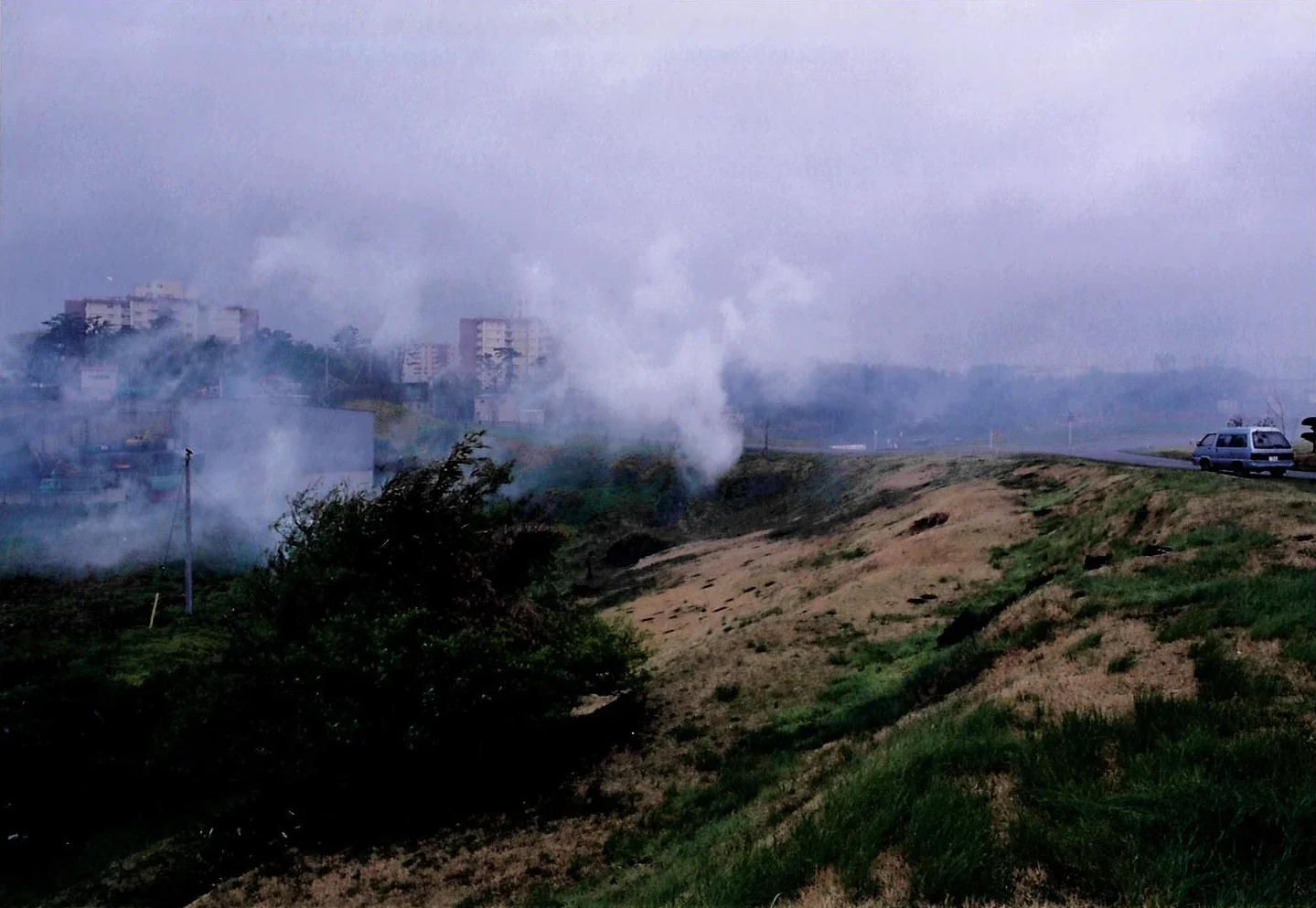
Chemical Exposures at Naval Air Facility Atsugi
During the operation of the Shinkampo incinerator complex, the Department of the Navy conducted extensive environmental sampling and health risk assessments to evaluate potential exposures affecting the base population. These efforts included:
Multiple air and soil sampling campaigns (1988 to 2001)
Two screening human health risk assessments (1995, 1998)
A comprehensive human health risk assessment (2002)
VFEA evaluated all available sampling data (1988-2002) and identified nearly 290 analytes detected in the ambient air and soil. Based on maximum detected concentrations, 83 of these analytes would be classified as contaminants of concern under current EPA screening levels and standards.
Ambient Air
70 contaminants of concern were identified in the ambient air.
38 chemicals exceed EPA residential air Regional Screening Levels (RSLs) for cancer
53 chemicals exceed EPA residential air RSLs for non‑cancer effects
6 chemicals exceed EPA National Ambient Air Quality Standards (NAAQS) for criteria pollutants.
Soil
21 contaminants of concern were identified in the soil.
8 chemicals exceed EPA residential soil RSLs for cancer
16 chemicals exceed EPA residential soil RSLs for non‑cancer effects
Water
7 contaminants of concern were identified in the water.
4 chemicals exceed EPA residential tap water Regional Screening Levels (RSLs) for cancer
6 chemicals exceed EPA residential tap water RSLs for non‑cancer effects
7 chemicals exceed EPA Maximum Contaminent Level Goals(MCLG) and Maximum Contaminant Levels (MCL)
Groundwater and potable water were not sampled in any of the enviornmental sampling studies. However, regular and occasional monitoring was conducted for select contaminants under the Safe Drinking Water Act (SDWA). Based on sporadic water sampling reports available from 1989-2007, there were numerous recurrent exceedances of EPA RSLs, Maximum Contaminant Level Goals (MCLG) and Maximum Contaminant Levels (MCL) for Lead, occasional exceedances of Trichloroethylene (TCE), and a few exceedances of Nitrate and bis(2-ethylhexyl) phthalate.
NAF Atsugi’s 2020 Consumer Confidence Report was the first publicly available water sampling report which included analysis of PFAS (per- and polyfluoroalkyl substances). Sampling included a standard panel of at least seven PFAS compounds, including the most studied substances, PFOA and PFOS. All seven were detected in the drinking water system. Subsequent annual monitoring has shown the consistent presence of all seven and significant exceedances of current EPA RSLs and MCLs for PFHxS, PFOA, and PFOS. The Maximum Contaminant Level Goals (MCLGs) for PFOA and PFOS are set at zero, as no safe level of exposure has been established.
PFAS substances—such as AFFF firefighting foam—have been used on base since at least the 1970s, including routine dispersion during firefighting training exercises and occasional hangar discharges, which can then migrate into surrounding soils and groundwater. Given the shallow aquifer and vulnerable groundwater conditions underlying the base, the reliance on groundwater as a potable water source, the lack of treatment systems capable of removing PFAS historically, the extreme persistence of these compounds, and the absence of routine PFAS monitoring until relatively recently, it is plausible that PFAS contamination in the drinking water system existed for decades prior to formal testing. For these reasons, it is included in this review.
EPA RSL: U.S. Environmental Protection Agency Regional Screening Levels (RSLs) are risk-based chemical concentration values developed by the EPA to help identify contaminants in air, soil, and water that may warrant further investigation or cleanup; values are conservative health-protective screening tools, not regulatory standards.
EPA Cancer RSL (Target Risk = 1E‑06): EPA screening levels for cancer based on a lifetime excess cancer risk of 1 in 1,000,000.
EPA Noncancer RSL (Target Hazard Quotient = 0.1): EPA non‑cancer screening levels based on 10% of the reference dose (HQ = 0.1); used to account for cumulative risks from multiple chemicals.
EPA NAAQS: EPA National Ambient Air Quality Standards are federal outdoor air quality standards for certain criteria pollutants set to protect public health with an adequate margin of safety.
EPA MCLG: EPA Maximum Contaminant Level Goals (MCLG) are the level of a contaminant in drinking water below which there is no known or expected risk to health. MCLGs allow for a margin of safety and are non-enforceable public health goals.
EPA MCL: EPA Maximum Contaminant Levels (MCL) are the highest level of a contaminant that is allowed in drinking water. MCLs are set as close to MCLGs as feasible using the best available treatment technology and taking cost into consideration. MCLs are enforceable standards.